
"Natural conditions"
6000 article(s) found

Introduction of Crystal Coffee in Cuban Coffee producing areas with humid Climate and abundant Rain Water
With fertile land, humid climate and abundant Rain Water, Cuba can be called a natural treasure land for coffee cultivation. The suitable natural conditions provide a favorable natural environment for the growth of coffee trees. Coffee is well cultivated and developed here, and the best coffee growing area in Cuba is located in the Central Mountains. Because in addition to growing coffee in this area, there are also precious minerals such as quartz and crystals.

Peruvian Coffee Flavor Taste Manor Introduction Peruvian Organic Coffee Features
Peru's finest coffees are produced in Chassimayo, Cusco, Nott and Puno. Most Peruvian coffee is grown under natural conditions, but it is difficult to confirm the cultivation status of all coffee trees. Coffee grown under natural conditions costs 10%-20% more than others and is exported to the United States and Japan. The quality of Peruvian coffee is comparable to any coffee from Central or South America. Peru

Cuban Coffee Fine Coffee Cuban Crystal Mountain Coffee latest introduction and information unique flavor
In 1748, coffee was introduced into Cuba from Domiga, and Cuba began to grow coffee ever since. With fertile land, humid climate and abundant Rain Water, Cuba can be called a natural treasure land for coffee cultivation. The suitable natural conditions provide a favorable natural environment for the growth of coffee trees, and coffee is well planted and developed here. In Cuba, the cultivation of coffee is regulated by the state. Cuba is the best

Introduction to Peruvian Coffee Flavor description, Grinding degree, Taste treatment methods and characteristics of producing areas
Peruvian coffee producing areas: up to 98% of Peruvian coffee is grown in forest areas, and most of the producers are small farmers. Peru's finest coffee is produced in Chanchmayo, Cuzco, Norte and Puno. Most Peruvian coffee is grown under natural conditions, but it is also difficult to confirm the cultivation of all coffee trees. Natural condition

Peruvian cicada tea Mayu coffee beans
Up to 98 per cent of Peruvian coffee is grown in forest areas, most of the producers are small farmers, and Peru's best coffee is produced in several regions, such as Chanchamayo, Cuzco, Norte and Puno. Most Peruvian coffee is grown under natural conditions, but it is also difficult to confirm the cultivation of all coffee trees. Natural condition

Hawaiian coffee beans Hawaiian Kona coffee
Kona coffee beans from Hawaii have the most perfect appearance. Their fruits are extremely full and shiny. They are the most beautiful coffee beans in the world. The coffee is smooth and fragrant, with an attractive nutty flavor and a well-balanced acidity, as charming as the colorful colors of the island of Hawaii and a long finish. The world-famous Kona of Hawaii is mellow and sour.

A brief introduction to the treatment method of grinding degree and baking degree of fine coffee beans in Santa Cruz Manor with balanced acidity
St. Cristobal is a larger island in the Galapagos archipelago. At 410m above sea level, there is a small lake called El.Junco, which forms streams along the rocks and volcanic rocks on the southern slope of the island. Mineral-rich fresh water moistens the land of St. Cristobal, keeping the soil moist and fertile. For here.
Coffee beans Peruvian cicada tea Mayu coffee beans
Up to 98 per cent of Peruvian coffee is grown in forest areas, most of the producers are small farmers, and Peru's best coffee is produced in several regions, such as Chanchamayo, Cuzco, Norte and Puno. Most Peruvian coffee is grown under natural conditions, but it is also difficult to confirm the cultivation of all coffee trees. Natural condition

Santa Cruz Manor single Pin Bean Manor what Santa Cruz Manor single Bean Baking suggestions
For professional baristas, please pay attention to the coffee workshop (official Wechat account cafe_style) Ecuador's superior geographical location, fertile soil and special climatic conditions have created a superior natural environment for coffee cultivation in the country. Ecuador is one of the few countries in the world that can produce both Arabica and Robusta coffee beans.
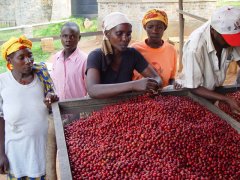
Dry treatment is also called natural all-day tanning.
Dry treatment (secado), also known as natural all-day exposure (natural). After the coffee fruit is actually picked, it is dried directly in the sun. According to the weather conditions, it is generally necessary to dry the coffee beans for 2 weeks to reduce the water content of the coffee beans to 10%, 12%, and then use a machine to remove the dried peel and pulp. The raw bean processing plant (beneficio) usually retains the parchment shell on the outside of the coffee bean when the raw bean is stored.

Peruvian boutique coffee introduces the characteristics of Peruvian coffee the taste of Peruvian coffee the quality of Peruvian coffee
Peruvian coffee producing areas: up to 98% of Peruvian coffee is grown in forest areas, and most of the producers are small farmers. Peru's finest coffee is produced in Chanchmayo, Cuzco, Norte and Puno. Most Peruvian coffee is grown under natural conditions, but it is also difficult to confirm the cultivation of all coffee trees. Under natural conditions

Rich and sweet Peruvian coffee flavor manor production area introduces Peruvian organic coffee
Peru's finest coffee is produced in Chaximayo, Cusco, Note and Puno. Most Peruvian coffee is grown under natural conditions, but it is also difficult to confirm the cultivation of all coffee trees. Coffee grown under natural conditions costs 10% more than others and is exported to the United States and Japan. The quality of Peruvian coffee is comparable to that of any kind of coffee in Central or South America. Peru

Introduction to taste treatment of brand flavor description in graded production area of Peruvian coffee beans
Peru's finest coffee is produced in Chaximayo, Cusco, Note and Puno. Most Peruvian coffee is grown under natural conditions, but it is also difficult to confirm the cultivation of all coffee trees. Coffee grown under natural conditions costs 10% more than others and is exported to the United States and Japan. The quality of Peruvian coffee is comparable to that of any kind of coffee in Central or South America. Peru

Full-bodied and sweet boutique coffee Peruvian coffee flavor introduction Peruvian coffee bean variety manor
Peru's finest coffee is produced in Chanchmayo, Cuzco, Norte and Puno. It is most famous for the coffee beans produced in Chaximayo in the middle and Cusco in the south. Most Peruvian coffee is grown under natural conditions and produces characteristic organic coffee. Organic coffee is made of beans grown in the shade of trees. Nature

Hawaiian Coffee Flavor description Grinding degree treatment method introduction to baking degree
Hawaii's coffee industry has to compete with the expanding tourism industry. Most coffee is grown on the slopes of MaunaLoa. Mauna Loa was originally a volcano located in the western part of the Kona region on the island of Hawaii. The coffee producing area is about 30 kilometers long and its growing areas are mainly concentrated in the north and south of the area. Coffee trees are planted in relatively desolate areas, but they

Differences in Ethiopian coffee
A large amount of coffee production (95%) is done by small shareholders, with an average yield of 561 kg per hectare. For centuries, minority holders of Ethiopian coffee farms have been producing a variety of high-quality types of coffee. The secret of producing high-quality coffee is that coffee growers have developed environmental conditions through generations of repeated learning about the coffee planting process.
Grading, price, raw bean and baking curve of single bean in Santa Cruz Manor, Ecuador
For professional baristas, please pay attention to the coffee workshop (Wechat official account cafe_style) Ecuador Santa Cruz Manor single bean classification, price, raw beans and baking curve Ecuador's superior geographical location, fertile soil and special climatic conditions have created a superior natural environment for coffee cultivation in the country. Ecuador is one of the few countries in the world that can produce Allah at the same time.

Carmen Manor SHB, EP Natural primitive Forest to grow Coffee single Coffee
Boutique coffee (specialty coffee) is also called specialty coffee selection coffee. It refers to coffee made from a small number of raw beans with excellent taste grown in an ideal geographical environment. Depending on the special soil and climatic conditions in which they grow, they have outstanding flavor. After strict selection and classification, this kind of coffee is hard in texture, rich in taste and stylish.

The origin of Cuban Crystal Mountain coffee, the growing area of Cuban Crystal Mountain coffee.
Following caf é (Wechat official account vdailycom) found that the origin of Crystal Mountain Coffee in Cuba where the beautiful cafe opened its own shop [CubitaCoffee]. In Cuba, the cultivation of coffee is managed by the state. The land in Cuba is fertile, the climate is humid, and the rainfall is abundant. It can be called a natural treasure place for coffee cultivation, and the suitable natural conditions provide favorable conditions for the growth of coffee trees.

The characteristics of Cubita Cuban Crystal Mountain Coffee the unique addition of special coffee beans in island coffee beans
In 1748, coffee was introduced into Cuba from Domiga, and Cuba began to grow coffee ever since. With fertile land, humid climate and abundant Rain Water, Cuba can be called a natural treasure land for coffee cultivation. The suitable natural conditions provide a favorable natural environment for the growth of coffee trees, and coffee is well planted and developed here. In Cuba, the cultivation of coffee is regulated by the state. Cuba is the best